

Bee Control That Protects Pollinators and Your Property, in That Order
Professional Bee Control & Removal Services
Not every bee problem has the same solution, and applying the wrong one can make your situation significantly worse. Alta’s certified technicians identify the correct bee species before any treatment decision is made: honey bee colonies require live extraction and relocation coordinated with a licensed beekeeper, while carpenter bees boring through your deck and fascia boards require targeted dust treatments, gallery plugging, and preventative surface barriers.rn
Schedule an Expert Bee InspectionPlan Comparison
We don’t offer one-time treatments; they only provide short-term relief. Our recurring service keeps pests out with consistent visits and free re-treatments
| Preventative Quarterly | Most Popular Pro Pest Plus | Preventative Bi-Monthly | |
|---|---|---|---|
| Covers ants, spiders, roaches, and more | |||
| Interior + exterior treatment | |||
| Rodent bait stations included | |||
| 30ft yard granulation barrier | |||
| Free attic & crawlspace inspection¹ | |||
| Same technician visits (when possible) | |||
| Digital visit summary + text alerts | |||
| Mosquito and tick control | |||
| 100% satisfaction guarantee | |||
| Serviced | Quarterly | Bi-Monthly | Bi-Monthly |
| Good | Best | Better |
All plans include 100% satisfaction guarantee and 48-hour response guarantee.
¹ Same day and next day availability
Our Multi-Step Bee Management Process
Every bee management service begins with species identification, because the treatment path for a honey bee colony and a carpenter bee infestation diverge completely from Step 1 forward.rn
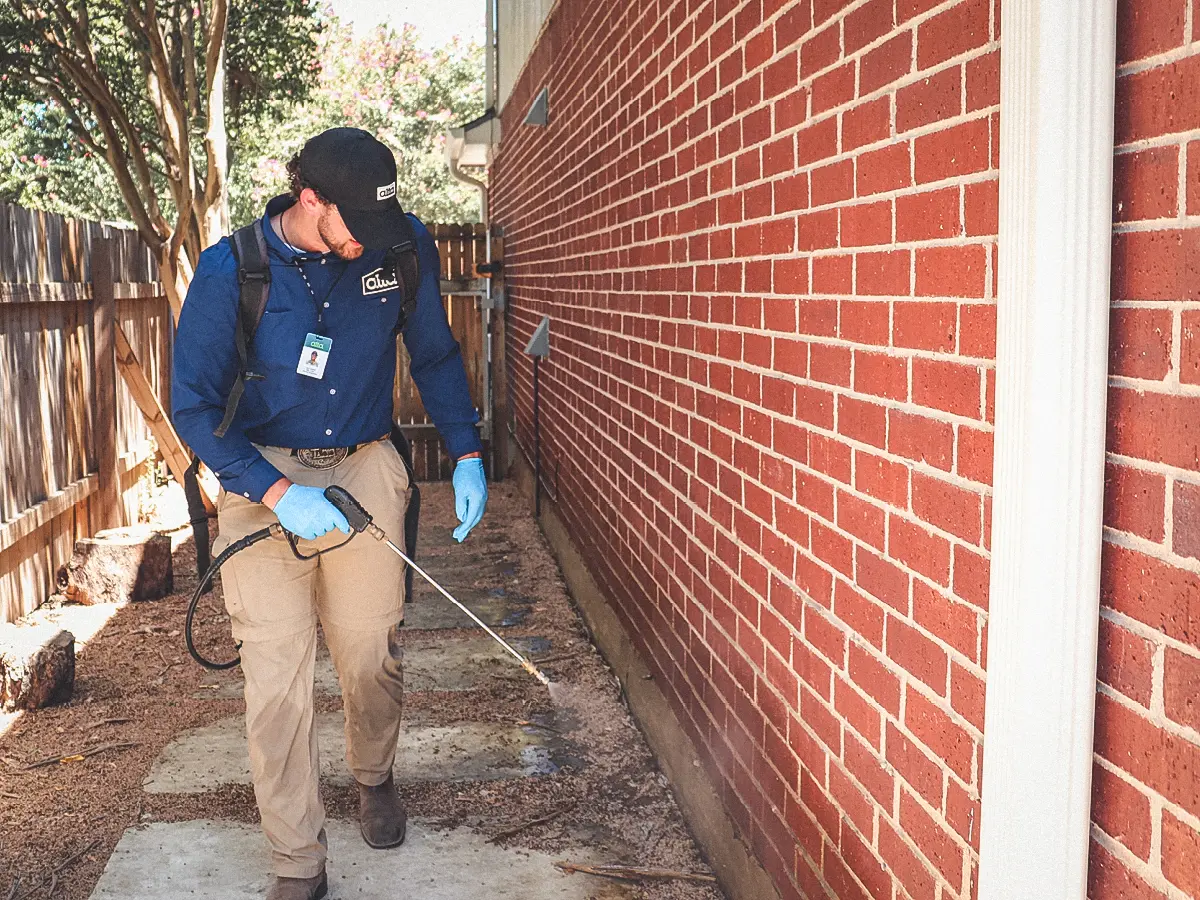

Species & Hive Identification
Our certified technicians locate the exact nesting site and identify the species before any treatment decision is made. For honey bees, we assess the colony size, accessibility, and the structural void it occupies; for carpenter bees, we map all active entry holes, assess gallery depth and orientation, and identify any secondary woodpecker damage, which frequently targets carpenter bee galleries and causes additional structural compromise.rn

Eco-Friendly Relocation or Targeted Treatment
Confirmed honey bee colonies are carefully extracted in coordination with a local licensed beekeeper, the queen is located and transferred first, and the colony follows. For carpenter bees, our technicians inject specialized residual insecticide dusts directly into each gallery past the 90-degree turn, reaching the nesting female and her eggs in the chamber where liquid sprays cannot penetrate.rn

Gallery Plugging & Wood Repair
Once treatment is confirmed complete and the gallery population eliminated, our technicians plug each entry hole with hardwood dowels or appropriate bio-materials to prevent future bees from reusing the existing tunnel. This step is critical: carpenter bee females preferentially return to previously excavated wood and will enlarge existing galleries rather than bore new ones if entry points are left accessible.rn

Long-Term Preventative Barrier
We apply a residual preventative spray to eaves, fascia boards, exposed timber, and deck surfaces to deter new carpenter bee females from selecting those locations for boring during the next active season. Paired with a recommendation to paint or seal exposed wood, the single most effective long-term deterrent, this application significantly reduces annual reinfestation pressure on treated structures.rn
Year-Round Protection: The Value of Ongoing Bee Management
Carpenter bee pressure is annual, female offspring return to the same wood their parents used, and a property with established galleries that receives no preventative treatment will face escalating structural damage each successive season. Our general pest control plans can be structured to include seasonal bee barrier applications alongside year-round pest protection, and if carpenter bees return and begin new boring activity between visits, we come back at no additional charge.
How Bee Control Works
01
Schedule Your Inspection
Book online or call to arrange a professional bee inspection. Same-day and next-day appointments are available.rn
02
Species ID & Targeted Treatment
We identify the species, deploy interior bait systems, and apply your exterior perimeter barrier to address current activity and cut off future entry.
03
Ongoing Protection
Annual preventative barrier applications ahead of carpenter bee season maintain protection on treated structures. If bees return and begin new boring activity between visits, so do we.rn
Why DIY Bee Control Can Be Dangerous
The two most common DIY responses to a bee problem, spraying foam into an active hive and plugging entry holes before treatment is complete, both produce outcomes that are significantly worse than the original problem.rn
Why Customers Choose Alta for Bee Control
Species-First Identification
We identify the bee species before any treatment decision is made. The wrong response to the wrong bee species makes the problem worse, which is why accurate identification is the foundation of every service we provide.rn

Pollinator-Responsible Approach
We prioritize live honey bee extraction and relocation over extermination whenever safely possible, working with local licensed beekeepers to give rescued colonies a managed home. Chemical treatment of honey bee colonies is strictly a last resort.rn

Structural Defense for Carpenter Bees
Our gallery dust injection, entry hole plugging, and preventative surface barrier combine to address the active infestation, prevent reuse of existing galleries, and deter new boring activity on treated structures, the complete carpenter bee defense strategy.rn

Satisfaction Guaranteed
If bees return and begin new activity between your scheduled service visits, we return at no additional charge, period.rn
What our Customers say
1,000’s of Reviews From Local Homeowners


Frequently Asked Questions About Bee Control & Removal Services
Do you kill honey bees during a bee control service?
No, whenever we encounter honey bees, live extraction and relocation is our primary objective. We work with local licensed beekeepers to safely remove the queen and her colony to a managed hive box where they can continue to pollinate. Chemical treatment of a honey bee colony is strictly a last resort, reserved for situations where live extraction is structurally infeasible or public safety is critically compromised.rn
How much structural damage can carpenter bees actually cause?
More than most homeowners expect, a single gallery bored in one season can extend several feet into a structural beam over multiple years as the tunnel is expanded, and female offspring preferentially return to the same wood to drill new chambers each successive season. On a deck, fascia board, or roof truss with multiple years of unaddressed activity, the cumulative gallery network can meaningfully compromise structural integrity. Woodpeckers compound the problem, they locate carpenter bee larvae by sound and excavate aggressively, causing additional surface damage on top of the gallery network.rn
What is the difference between a bumblebee and a carpenter bee?
They're similar in size and coloration at a distance, but the abdomen is the giveaway, bumblebees have fuzzy, hairy abdomens with yellow markings and nest underground in small social colonies. Carpenter bees have a shiny, completely smooth, solid black abdomen with no yellow markings on the rear, and nest exclusively by boring into wood as solitary individuals. The large, hovering bees patrolling your deck or eaves are almost certainly carpenter bees; the ones foraging on flowers are more likely bumblebees.rn
How long does carpenter bee treatment take to work?
Gallery dust treatments begin eliminating active nesting females within the first day of application, and the residual dust maintains effectiveness inside the gallery for several weeks, eliminating any larvae that hatch after the initial treatment. Entry holes are plugged after the treatment period is confirmed complete, typically during a follow-up visit, to prevent reuse. The full treatment sequence, including gallery plugging and preventative barrier application, is completed within one to two service visits.rn
Are bee control treatments safe for my garden and other pollinators?
Yes, our carpenter bee treatments are applied directly into wood galleries and to structural surfaces, not to flowering plants, garden beds, or areas where foraging pollinators are active. The gallery dust injection is a closed-system application that stays inside the wood, and the preventative surface barrier is applied to eaves, fascia, and exposed timber, not to plants or soil. Your garden pollinators are not at risk from properly applied carpenter bee treatment.rn
Do I need to be home during bee control service?
For honey bee extraction involving interior structural access, we ask that someone be home to provide access to the affected area. Exterior carpenter bee treatments, gallery injection, plugging, and preventative barrier, can often be completed without you present once the service parameters have been confirmed. Your scheduling team will walk you through what access is needed before your appointment.rn
A dedicated representative will reach out to you and answer any questions
Book Your First Treatment Now!
Protect Your Property and Family, Contact Alta Pest Control Today
Pest-free living starts today. We’ll take your bees to a better place.rn

We Take These Bugs to a Better Place


⏰ Expert bee identification, live honey bee relocation, and structural carpenter bee defense. Call now or schedule service online.