
Carpenter ants and termites are two pests that can cause serious damage to the wood in your home. Differentiating between the two is important because there are different ways of dealing with each.
When you figure out how each insect looks and behaves, it becomes easier to choose the right solution. Having that knowledge upfront can save you time, money, and frustration while making sure the problem is handled properly. So, let’s discuss the carpenter ants vs termites differences.
Carpenter Ants vs Termites: Key Differences?
Differences in Physical Traits
From a glance, carpenter ants and termites can look a lot alike, but there are clear physical traits that help you tell them apart once you know what to look for.
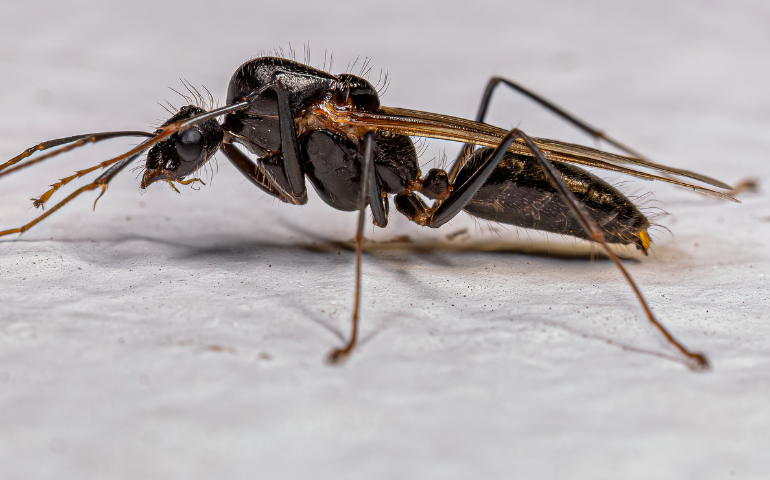
- Carpenter ants have a narrow waist that looks pinched between the thorax and abdomen, while termites have a thicker, straight waist that gives their bodies a more even, tube-like shape. Their antennae are also different. Carpenter ants have bent, elbowed antennae, while termites have straight antennae that look beaded.
- The colors can help too. Carpenter ants are usually black, dark brown, red, or yellow. Termites vary depending on their type, but they can range from creamy white to darker shades of brown and even black.
- Wings are another clue. Winged carpenter ants have front wings that are larger than the hind wings, while winged termites, often called swarmers, have two pairs of wings that are the same size.
Differences in Infestation Clues
Both carpenter ants and termites can weaken wooden structures, but the signs they leave behind are quite different and can help you figure out which pest you’re dealing with.
- Termites often leave behind mud tubes along foundations or walls. These narrow tunnels, built from soil, wood, and saliva, keep them protected and moist as they travel between their nest and food source.
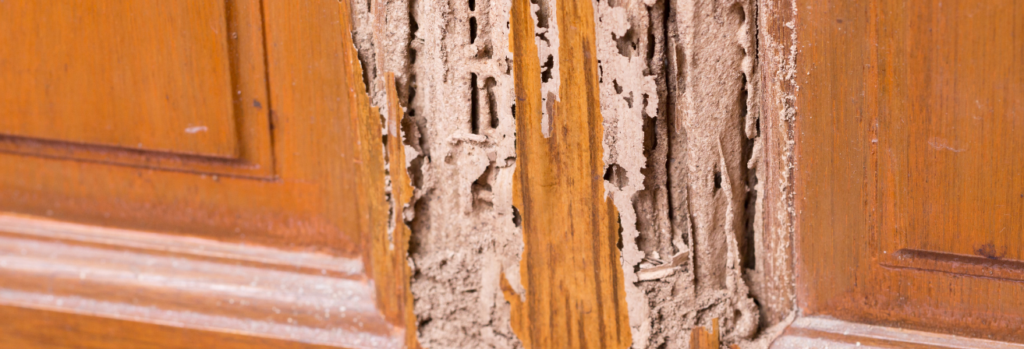
- Wood damaged by termites tends to look like it has suffered from water damage, as it may warp, sag, darken, or crumble apart.
- Carpenter ants push out frass, which looks like fine sawdust or small wood pellets. These small piles around holes or near wooden structures are a strong clue of their activity.
Differences in Behavior and Habits
Apart from their appearance and the signs they leave, carpenter ants and termites also stand apart in the way they behave and how they interact with wood.
- Termites actually feed on wood, which means the damage they create is ongoing and can become serious if it goes unnoticed. Carpenter ants, on the other hand, do not eat the wood. Instead, they carve out hollow spaces to build tunnels and nests. Because of this, the damage from carpenter ants usually spreads at a slower pace.
- Their daily habits differ as well. Carpenter ants are most active at night and will forage for food like sweets, fruits, meat, and even pet food. Termites stay hidden most of the time, moving within their tunnels, and the main time they are noticed is when they swarm.
- The timing of swarms can overlap. Carpenter ants and subterranean termites often swarm in spring, while drywood and dampwood termites usually swarm during the warmer months of summer or into the fall.
How to Get Rid of Carpenter Ants vs Termites
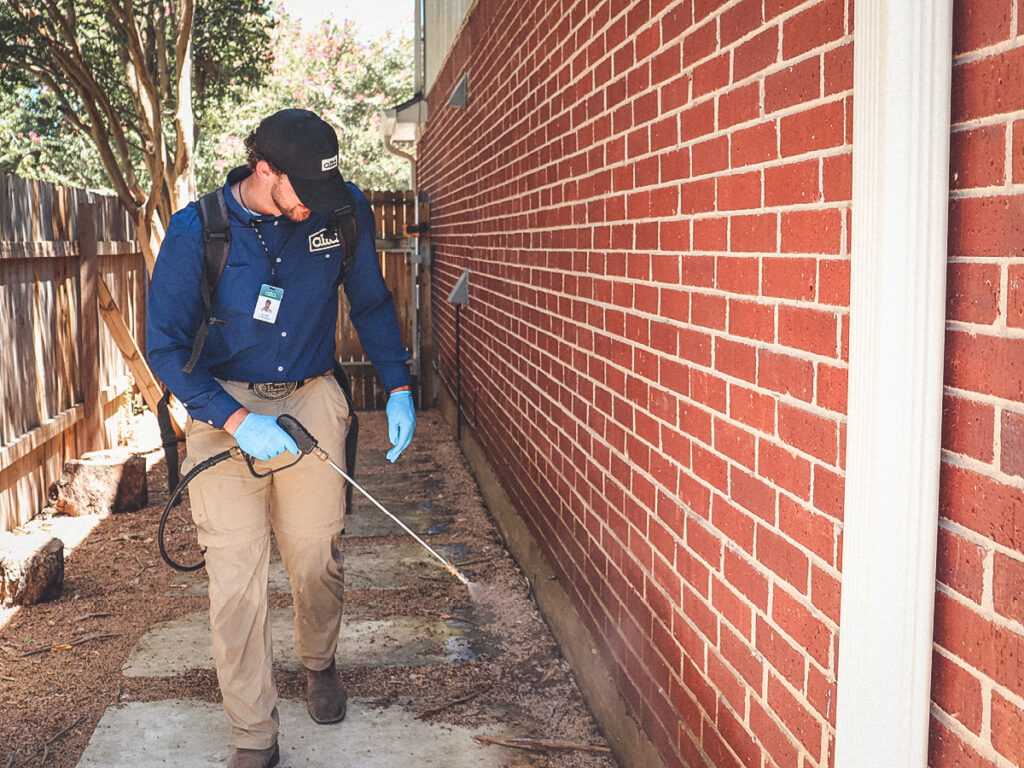
Carpenter ants can usually be managed with baits, wood injections, or sprays and powders designed to reach their nests. Since these ants often dig deep into the wood, one treatment on its own may not be enough, so using a mix of methods tends to work better. In some cases, drywood termites can also be handled with these same approaches.
Subterranean termites are different because they live in the soil close to your home. For them, liquid termite barriers placed around the foundation and termite bait stations are the go-to options. The barriers block the colony from spreading further, while the bait stations help reduce their numbers and make it easier to keep track of activity. Staying on top of inspections and repeating treatments when needed is key to keeping both carpenter ants and termites under control.
Alternatively, you can try Alta Pest Control if you need professional assistance with getting rid of both carpenter ants and termites. Their services include controlling infestations on residential properties such as single-family homes, townhouses, and duplexes.
Damage Potential of Carpenter Ants vs Termites
One of the clearest differences between carpenter ants and termites is the level of destruction they can cause over time. Termites are by far the more damaging because wood is their main food source. The colony keeps eating until it’s dealt with, which means the damage continues nonstop. In serious cases, termites can weaken beams, floors, and walls, putting the structure of a home at risk. If left untreated, the repairs can be extremely costly and may even create safety concerns.
Carpenter ants don’t eat the wood itself, but they still cause problems by carving out tunnels and chambers for their nests. This hollowing weakens wooden beams and other parts of the house, though the damage usually develops more slowly compared to termites. That said, a carpenter ant problem shouldn’t be ignored. If multiple colonies are spread out in different areas, the long-term damage can still become significant.
Prevention Tips
Preventing carpenter ants and termites mostly comes down to making your home less appealing to them. Since both are drawn to wood and moisture, reducing those conditions is key.
- Fix leaky pipes, clogged gutters, or any other sources of moisture around your home’s foundation.
- Store firewood, lumber, and other wood away from the house and keep it off the ground.
- Make sure to seal all cracks and gaps in walls, the foundation, and around windows or doors to block entry points.
- Try to trim back tree branches, shrubs, and plants so they don’t touch your house.
- Ensure that all the crawl spaces, basements, and attics have good ventilation to prevent excess humidity.
- Do your best to schedule regular inspections, especially if you live in an area where termites are common.
These steps won’t guarantee you’ll never have an issue, but they make your home far less inviting to carpenter ants and termites.
Share article: