
Anthrenus carpet beetles might be small, but they can cause a lot of frustration in your home. The most common type you’ll find is the Anthrenus carpet beetle, a tiny insect that often sneaks in from outside and settles into carpets, rugs, and upholstered furniture. Once inside, they can quickly turn into a full-blown problem if left untreated.
At Alta Pest Control, we help families deal with carpet beetle infestations before they spread. Here’s what you should know about these pests, including how they live and, most importantly, how to get rid of carpet beetles. See if we service your area.
What Are Anthrenus Carpet Beetles?
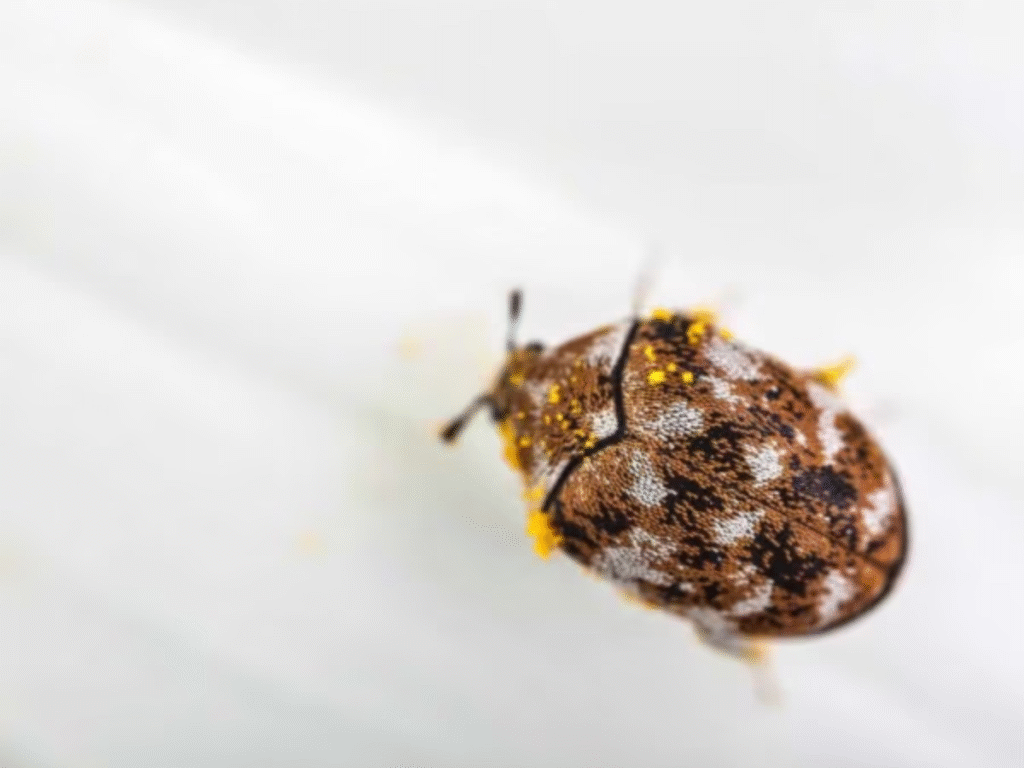
Anthrenus carpet beetles are a beetle species in the larger carpet beetle family. They are tiny, usually less than a quarter of an inch long, and shaped like a ladybug. Unlike ladybugs, though, they don’t bring any good luck to your home.
- Appearance: Adults have mottled scales in shades of black, brown, yellow, and white.
- Habits: Adult beetles feed on pollen and nectar outdoors. Indoors, the real trouble comes from their larvae.
- Damage: The larvae chew through carpets and rugs, upholstered furniture, clothing, and stored fabrics.
Although they don’t bite people, their hair can sometimes cause mild skin irritation, which is another reason families are eager to keep them out.
How to Identify Carpet Beetles
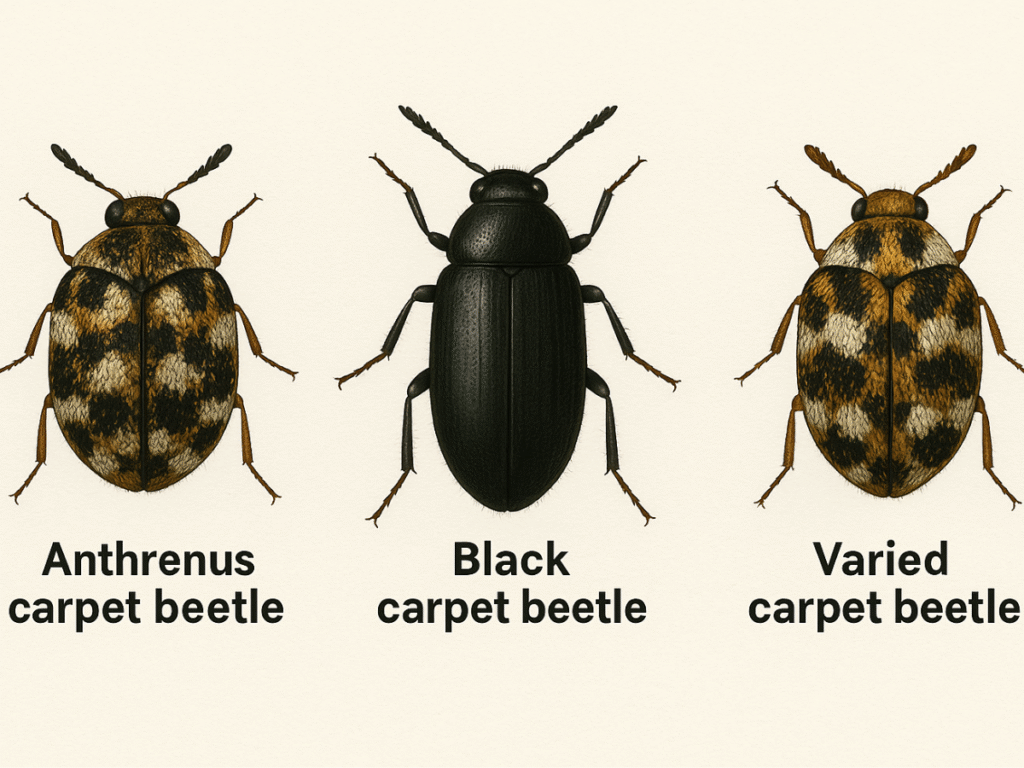
Carpet beetles may be tiny, but not all of them are the same. In fact, a few different species can show up in homes. Knowing what type you’re dealing with helps explain the damage you see and the best way to get rid of them. Every varied carpet beetle is an Anthrenus, but not every Anthrenus is a varied carpet beetle.
Anthrenus carpet beetles
These are the most common types. Adults are small and round, with a mottled pattern of black, white, brown, and yellow scales. While the adults mainly feed on pollen and nectar outdoors, their bristly larvae do the most damage inside. They target carpets, rugs, clothing, and upholstered furniture.
Black carpet beetle
This species looks different from Anthrenus. Adults are solid black or dark brown and usually a little larger. Their smooth, carrot-shaped larvae are especially destructive, feeding on fabrics, stored goods, and even animal hair. Infestations often spread quickly if not treated.
Varied carpet beetle
A close relative of the Anthrenus, the varied carpet beetle also has a mottled pattern across its back. Their larvae are hairy and tough to control once they’ve found food sources in your home.
Why Do I Suddenly Have Carpet Beetles?
Carpet beetles often enter through open windows and doors, especially during warmer months when adults are looking for places to lay eggs. They can also come in on flowers, secondhand furniture, or even pet fur. If you suddenly notice them, it usually means they’ve found a food source inside, like carpets and rugs, upholstered furniture, or animal hair.
Anthrenus + Varied Carpet Beetle Life Cycle
Carpet beetles don’t just show up overnight—they follow a cycle that allows them to keep coming back if they’re not dealt with fully.
- Eggs hatch in hidden areas like baseboards, closets, and under furniture.
- The larval stage is where the most damage happens. The bristly larvae feed on fabrics, animal hair, and even dead insects.
- In the pupal stage, larvae transform into adults.
- Adults live mostly outdoors, feeding on pollen and nectar, but they return inside to lay eggs and start the cycle over again.
Because several generations can overlap, you may see adults at your windows while larvae are still feeding on your belongings inside.
How to Get Rid of Carpet Beetle Infestations
Once you’ve spotted Anthrenus or varied carpet beetles, the most important step is breaking their life cycle. Because carpet beetle eggs are tiny and hidden, you’ll need more than a quick spray to solve the problem.
Clean and Vacuum Regularly
Vacuuming carpets, rugs, and upholstered furniture helps remove larvae, shed skins, and eggs before they spread. Pay extra attention to dark corners, closets, and under furniture where furniture carpet beetles often hide.
Wash or Dry-Clean Fabrics
Infested clothing, curtains, or bedding should be washed in hot water or dry-cleaned. Heat kills both larvae and eggs. If items can’t be cleaned, consider storing them in airtight containers.
Eliminate Food Sources
Because carpet beetles feed on natural fibers, pet hair, and dead insects, reducing these food sources helps prevent infestations. Regularly groom pets, sweep baseboards, and keep pantries free of spilled grains or dry goods.
Seal Entry Points
Adult beetles often enter from outside. Seal cracks around windows, doors, and vents to keep them out. Avoid leaving untreated flowers or secondhand furniture indoors without inspecting them first.
Professional Carpet Beetle Control
DIY methods may kill a few insects, but they rarely eliminate the infestation fully. Sprays alone won’t reach hidden carpet beetle eggs. Professional treatment targets both larvae and adults to kill carpet beetles completely and prevent them from returning.
Stop Carpet Beetles Before They Spread
Anthrenus carpet beetle problems don’t just go away on their own. Once they’ve settled into your home, they’ll keep cycling through eggs, larvae, and adults until every source is treated. At Alta Pest Control, we know how to spot, identify, and stop Anthrenus carpet beetles, varied carpet beetles, and black carpet beetles before they damage your belongings.
Call Alta Pest Control today to protect your home and stop carpet beetles before they spread.
Share article: